
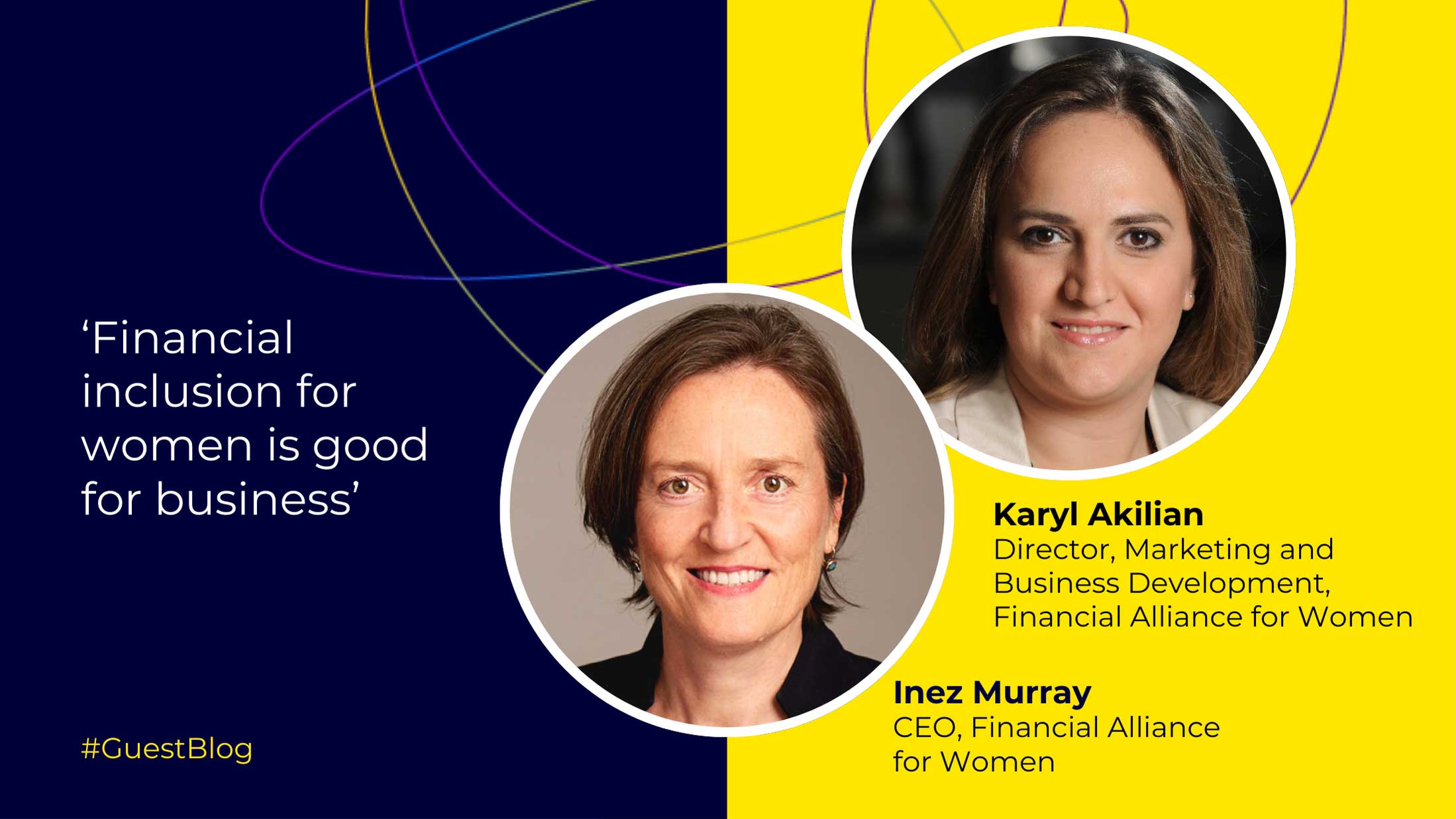
Narrowing the gender gap could add trillions to the global economy, unlocking over $300 billion per year in Sub-Saharan Africa. While there are many ways to unlock this potential, The Financial Alliance for Women says financial institutions hold the key, and fintechs like JUMO have the power to help them reach further, faster.
Global research shows that women’s non-performing loan rates are 20% to 30% lower than men’s, and women-owned SMEs often deliver stronger returns and repayment rates. When women access finance, they repay. The problem isn’t risk, it’s access.
Yet many financial institutions miss this because they don’t collect sex-disaggregated data. Without it, women remain invisible in performance reports, product development, and investment decisions. This lack of visibility has real consequences: women are excluded not because of how they perform, but because of how little we’re seeing and measuring them.
The role of Fintech in closing the gap
Fintechs have a unique opportunity to contribute to building inclusive financial services that serve women from day one. With accessible mobile-first models and alternative data for AI-driven credit scoring, they can bypass traditional barriers to access, like the need for collateral, travel constraints or the lack of formal documentation – and build products that work for women.
They can partner with mobile network providers and traditional banks to unlock access to credit and savings via mobile phones. That’s a huge win for women, who are often excluded from the formal banking system, but do own and use mobile phones daily. It’s this kind of embedded, everyday access that’s changing the game for financial inclusion, especially for women in low-income, informal sectors. By working within the systems people already use, fintechs put credit, savings, and other financial tools directly into the hands of women, without requiring them to step into a bank branch or present collateral they don’t have.
Fintechs have an opportunity to go further by intentionally designing products for inclusion and taking into account factors like language, literacy, trust, and cultural relevance. In doing so, they can provide financial experiences that work for women and open up lasting pathways to inclusion.
JUMO is a good example of this, an impact-driven fintech building digital financial services for emerging market customers, including those who are traditionally excluded. They’re part of a new wave of fintechs leveraging mobile technology to reach underserved populations at scale.
That’s why we, at the Financial Alliance for Women, launched a series of services geared towards fintechs: the Alliance Hack (annual hackathon) and Fintech Fridays, a space for holding bold conversations and fresh thinking on how fintechs can better serve women. Launched in 2021, these services bring together fintechs, financial service providers, big techs, investors and other players in the ecosystem to bridge financial inclusion gaps and explore how to elevate women’s financial experiences and accelerate their economic empowerment and growth.
More than talk, the Alliance showcases real solutions, shares practical insights, and connects members with each other to drive women-focused innovation.
And the opportunity is clear: our research shows the female economy is not only one of the fastest-growing, it’s also one of the most underserved. According to NielsenIQ, women currently control $31.8 trillion in global spending, and are projected to account for 75% of discretionary spending within the next five years. Fintechs are uniquely positioned to close the gap and tap into this market in ways traditional models haven’t.
Forward-looking institutions are taking note. Across our network at the Financial Alliance for Women, we’re seeing a shift, from conversation to strategy. Many of our members, particularly in Sub-Saharan Africa, are embedding inclusion into their core business models. They’re designing gender-smart financial solutions that reflect the real lives of women, such as:
- Lending based on cash flow and earning cycles instead of collateral
- Partnering with telcos and informal networks to expand reach
- Bundling financial products with business training and market access.
This is what inclusion looks like when it becomes part of the growth strategy – not an add-on, but a driver of long-term value. It’s not about ticking boxes. It’s about recognising women as a powerful force in building financial health and economic resilience.
The bottom line is… women are not a sub-segment
Women are not a sub-segment. They are half the global population and the future of financial growth. Institutions that continue to treat them as an afterthought risk falling behind. Those who lead will be the ones who invest in data, design intentionally, and build for real lives.Because inclusion isn’t just good for women.
It’s good for business.